.png)


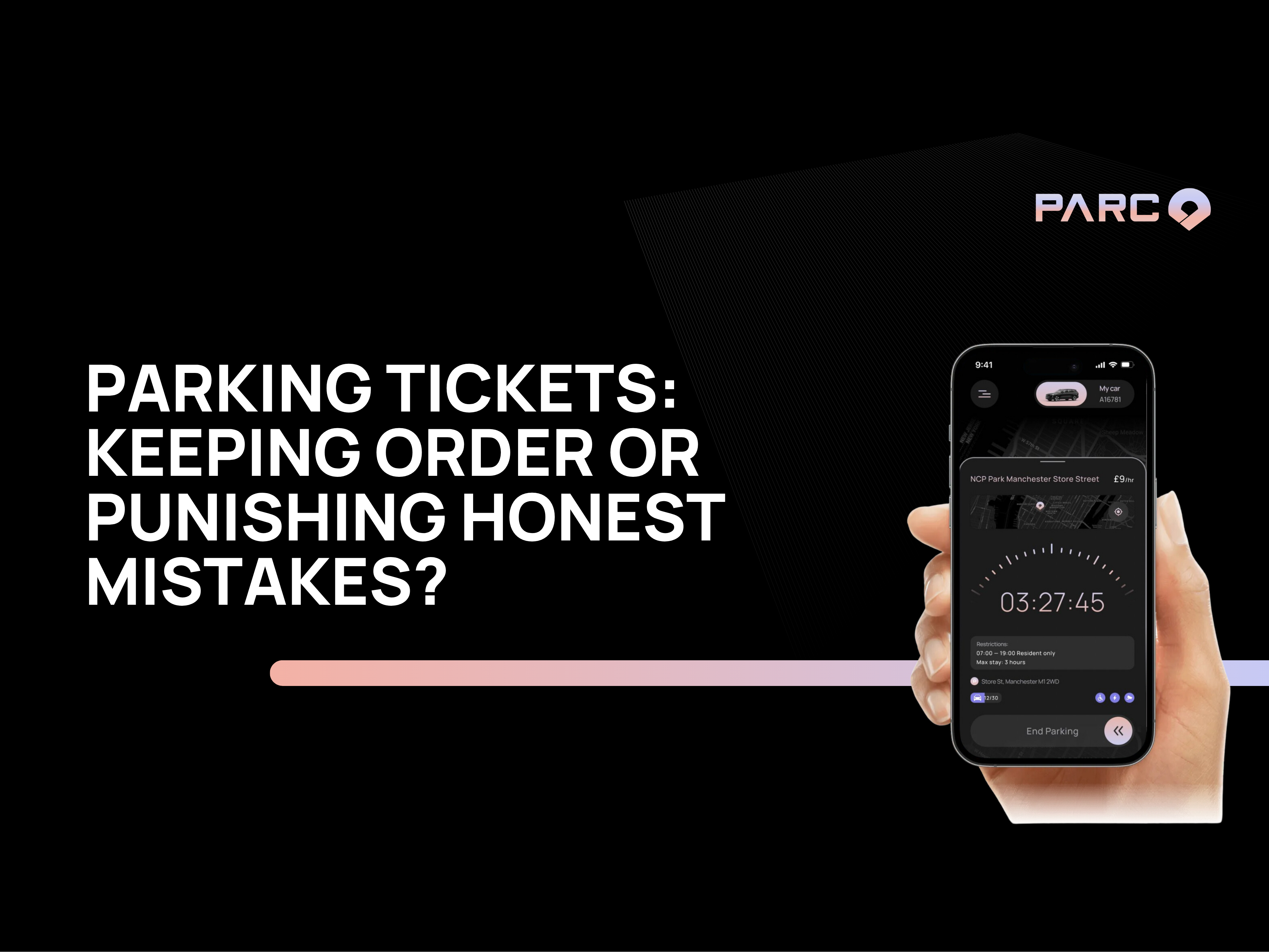
Parking tickets are a fact of life for most drivers.
Some see them as a necessary evil that keeps roads safe and traffic flowing. Others see them as an expensive punishment for honest mistakes.
When an extra 20 minutes of parking costs 80p, but the fine costs £60 or more, it's easy to see why many drivers feel frustrated.
So, are parking tickets helping our cities function, or is the system overdue for a rethink?
Let's start with the driver perspective.
We've all been there. You're running late, juggling a dozen things at once, and then that yellow envelope appears on your windscreen.
Parking fines can feel wildly disproportionate.
A small error, like forgetting to extend your parking session or entering the wrong location code, can result in a fine many times greater than the cost of the parking itself.
During a cost-of-living crisis, that extra expense can hit hard.
For someone living pay cheque to pay cheque, a parking fine isn't just annoying.
It's money that could have gone towards groceries, bills, or fuel.
A single ticket can create genuine financial stress.
Many drivers believe some councils and private parking operators focus too heavily on generating revenue.
The perception is that the system is designed to catch mistakes rather than prevent them.
Whether that's true or not, it's easy to understand why drivers feel frustrated when genuine errors are treated the same as deliberate rule-breaking.
Your working day lasts eight hours.
The car park only allows six.
Suddenly you're setting reminders, moving your car during lunch breaks, and worrying about expiry times instead of focusing on your day.
Even if you genuinely believe a parking ticket was issued unfairly, appealing it takes time.
You need photos, evidence, receipts, screenshots, and sometimes a lot of patience.
For many people, it's easier to pay the fine and move on.
Of course, there is another side to the argument.
Without restrictions, many city centres would quickly descend into chaos.
Parking controls help keep roads clear for:
Time restrictions encourage drivers to move on, making spaces available for others.
Without them, a handful of vehicles could occupy valuable spaces all day.
Parking fines generate significant income for councils.
That money is often used to support road maintenance, transport infrastructure, and public services.
The possibility of receiving a fine is often enough to stop people parking dangerously or irresponsibly.
Without enforcement, many drivers simply wouldn't follow the rules.
Most drivers understand why parking rules exist.
Nobody wants blocked roads, inaccessible pavements, or emergency vehicles unable to get through.
The frustration comes when genuine mistakes are treated the same as deliberate rule-breaking.
Entering one wrong digit in a parking app.
Forgetting to extend a session by a few minutes.
Paying for the wrong parking zone.
For many drivers, these aren't attempts to avoid paying.
They're simple human errors.
Which raises an important question:
Should parking systems be designed around catching mistakes, or preventing them in the first place?
Parking tickets and fines generate so much revenue that they're unlikely to disappear completely.
But that doesn't mean parking systems can't improve.
Technology now exists to make parking simpler, fairer, and less stressful.
Rather than relying on drivers to remember location codes, expiry times, payment deadlines, and parking restrictions, modern parking technology can help automate much of the process.
That's exactly what PARC is trying to do.
Avoid parking tickets altogether with PARC. Our automated AI app handles your parking for you.
You park. PARC parks for you.
No more forgetting to pay, overstaying, entering the wrong location code, or juggling multiple parking apps.
PARC automatically manages your parking session and keeps you parked until you return.
The world's first fully automated parking app.
The only parking app you'll ever need.
Parking tickets are designed to enforce parking rules, keep roads clear, improve safety, and ensure parking spaces remain available for other drivers.
Parking fines vary depending on the location and offence but can range from around £35 to over £100.
Critics argue some councils and private parking operators rely too heavily on parking fine income, while supporters say fines are necessary to enforce parking rules and discourage illegal parking.
Understanding local parking restrictions, paying attention to signage, and ensuring parking sessions remain active can help reduce the risk of receiving a fine.
PARC is the world's first automated parking app. You park your car, PARC parks for you. It automatically manages your parking session, helping drivers avoid parking fines caused by forgotten payments, expired sessions, or incorrect location codes.






.png)
