.png)


.png)
A parking ticket is a demand for payment issued because a vehicle has breached a parking restriction. In the UK there are two entirely different types: a Penalty Charge Notice (PCN), issued by a local council or Transport for London under statutory powers, and a Parking Charge Notice, issued by a private parking operator under contract law.
If you’ve received one, the right first step is always the same: work out which type it is, check the deadline printed on it, and decide within that window whether to pay, pay at the discounted rate, or appeal. Both types can be challenged, but the process, the deadlines, and the consequences of ignoring them are different for each.
Sources: Manchester City Council, Parking Services Annual Report 2024/25; POPLA Annual Report 2022/23; Traffic Penalty Tribunal Annual Appeal Statistics.
For the full picture of parking rules and restrictions beyond tickets, see our complete guide to parking in the UK.
This guide covers:
A parking ticket is a formal demand for payment issued when a vehicle is found to have broken a parking rule. That’s the simple version. In practice, “parking ticket” is used loosely to describe two legally distinct documents that happen to look similar on the windscreen.
The first is issued under statutory powers by a public authority: a council or, in London, a borough or Transport for London. This is a Penalty Charge Notice (PCN), and it’s a civil penalty, not a criminal one.
The second is issued by a private company managing land on behalf of a landowner: a supermarket, a retail park, a hospital, an airport. This is a Parking Charge Notice, and legally it’s closer to an invoice for breach of contract than a fine.
Both ask for money. Both have a deadline. Both can be challenged. But they are governed by different rules, and confusing the two is one of the most common reasons drivers respond the wrong way.
Beyond the council/private divide, it helps to know the specific categories you might encounter.
On-street PCNs: issued by a Civil Enforcement Officer or a camera for contraventions like overstaying, parking without payment, or parking in a restricted bay on a public road.
Off-street PCNs: issued in council-owned car parks, usually for the same kinds of contraventions as on-street.
Bus lane PCNs: issued, usually by camera, for driving or stopping in a bus lane during its hours of operation. These are enforced as a separate category from parking contraventions.
Moving traffic PCNs: cover offences like banned turns or entering a yellow box junction when the exit isn’t clear. Only councils with the relevant powers can issue these.
Private Parking Charge Notices: issued on private land, typically detected by ANPR cameras at the entrance and exit, for overstaying, non-payment, or breaching the site’s terms.
Excess Charge Notices: a less common variant, sometimes used in council car parks for underpayment rather than non-payment.
Manchester’s own enforcement data illustrates how these categories break down in practice: in 2024–25 the city issued 322,905 on-street PCNs, 56,345 off-street PCNs, 177,065 bus lane PCNs, and 48,068 moving traffic PCNs, a reminder that “parking ticket” covers a much wider range of contraventions than most drivers assume.
This is the single most useful distinction in this entire guide, so it’s worth setting out clearly.
The practical takeaway: if you’re not sure which one you’ve received, look for the words “Penalty Charge Notice” or “Parking Charge Notice” printed on the document itself, and check whether it was issued by a council crest or a private company logo. That single detail determines everything that follows.
Civil Enforcement Officers (CEOs), employed by or on behalf of councils, patrol public roads and council car parks and issue PCNs by hand or via handheld devices.
Camera enforcement, operated by councils, covers bus lanes, moving traffic contraventions, and increasingly some parking restrictions, with PCNs sent by post.
Private parking attendants and ANPR systems, operated by private parking companies, monitor entry and exit at private sites and issue Parking Charge Notices, usually by post, based on camera evidence.
Police and traffic wardens can, in limited circumstances, still issue tickets for obstruction or dangerous parking, though most day-to-day enforcement has moved to councils and private operators since powers were devolved.
It’s worth noting that anyone issuing a PCN on behalf of a council must operate within a legal framework and a published code of conduct, and private operators generally need to belong to an Accredited Trade Association (the British Parking Association or the International Parking Community) to access DVLA vehicle keeper data, which is what allows them to send you a Parking Charge Notice by post in the first place.
Most parking tickets aren’t issued because someone deliberately tried to avoid paying. They’re issued because of a small number of very ordinary mistakes.
The common thread is that almost every one of these mistakes happens because the system asks drivers to remember several separate details correctly, every single time, with no room for error. That’s the underlying problem this guide keeps coming back to.
Whether you’re appealing a council PCN or a private Parking Charge Notice, the process follows the same basic shape.
Step 1: Identify the type of ticket
Check whether it’s a Penalty Charge Notice or a Parking Charge Notice. This determines which set of rules and which appeal body applies.
Step 2: Read the reason given
Every ticket should state the specific contravention. Understanding exactly what you’re alleged to have done shapes what evidence you need.
Step 3: Gather your evidence
Photos, receipts, screenshots, and anything else that supports your case (see the evidence checklist below).
Step 4: Submit your appeal before the deadline
Most councils and operators allow appeals online. Write clearly, stick to the facts, and attach your evidence. Appealing within the initial window usually also protects your right to the discounted rate if the appeal is unsuccessful.
Step 5: Read the response carefully
If the appeal is rejected, you’ll be told how to escalate it, and by when.
Step 6: Escalate to an independent adjudicator if needed
Council tickets go to the Traffic Penalty Tribunal (or London Tribunals in London). Private tickets go to POPLA or the IAS, depending on the operator. These are free, independent of both you and the issuer, and their decision is final.
For a longer walkthrough with real examples, our guide on how to get out of a parking fine in the UK covers the process step by step.
The single biggest difference between a successful and unsuccessful appeal is usually the quality of the evidence, not the argument itself.
The strongest appeals combine more than one piece of evidence rather than relying on a single explanation. A written account of what happened is useful, but it carries far more weight alongside a photo or receipt that supports it. Our guide on how to beat parking tickets and appeal your fine sets out more real examples of evidence that has worked.
Independent adjudicators don’t rule based on sympathy. They rule based on whether the ticket was issued correctly and whether the contravention actually took place. Some of the most common successful grounds include:
Appeals succeed more often than most drivers expect. POPLA’s own reporting shows that close to half of appeals it handles result in the charge being cancelled, either because the operator concedes once challenged or because an adjudicator rules in the driver’s favour. Council PCN appeals to the Traffic Penalty Tribunal have historically seen a broadly similar pattern, with roughly half of contested cases allowed. That doesn’t mean every appeal will succeed, but it does mean assuming an appeal is pointless is usually the wrong assumption.
Ignoring a parking ticket doesn’t make it disappear, and the consequences escalate in a fairly predictable sequence.
For a council PCN:
For a private Parking Charge Notice:
In both cases, ignoring the ticket is almost always the worst option, even if you plan to dispute it. Responding, whether that’s paying, appealing, or explaining the circumstances, keeps you inside a process with clear rules, rather than outside one with escalating costs.
One reassurance worth stating clearly: wheel clamping or towing on private land without lawful authority has been a criminal offence in England and Wales since the Protection of Freedoms Act 2012. If you’re ever threatened with clamping by a private operator, that threat is not enforceable.
It’s not a criminal fine, and it’s not enforced the same way as a PCN, but it is a legally enforceable contractual charge. Ignoring it can still result in a County Court Judgment if the operator pursues it successfully.
Ownership, not driving, usually determines liability under keeper liability provisions, unless you tell the issuer who was driving within the required timeframe. This is a common and costly misunderstanding.
Enforcement agents have strict rules about when and how they can act, and entering a home by force for this type of civil debt is heavily restricted. The process is more limited than most drivers assume, but that doesn’t mean it should be ignored.
Submitting representations within the initial period usually preserves your right to the discount if the appeal fails, but the rules vary by council and operator, so it’s worth confirming rather than assuming.
Sometimes paying at the discounted rate is genuinely the more sensible option, particularly where there’s no real dispute about what happened. Appealing makes sense when you have a genuine case, not as a default response to every ticket.
What to do immediately after receiving a ticket:
Decision tree: should you appeal or pay?
Prevention checklist:
Nearly every mistake covered in this guide (forgetting to pay, entering the wrong location code, misjudging how long you’ll stay, losing track of which app a car park uses) happens because current parking systems rely on drivers remembering things correctly, under time pressure, every time they park.
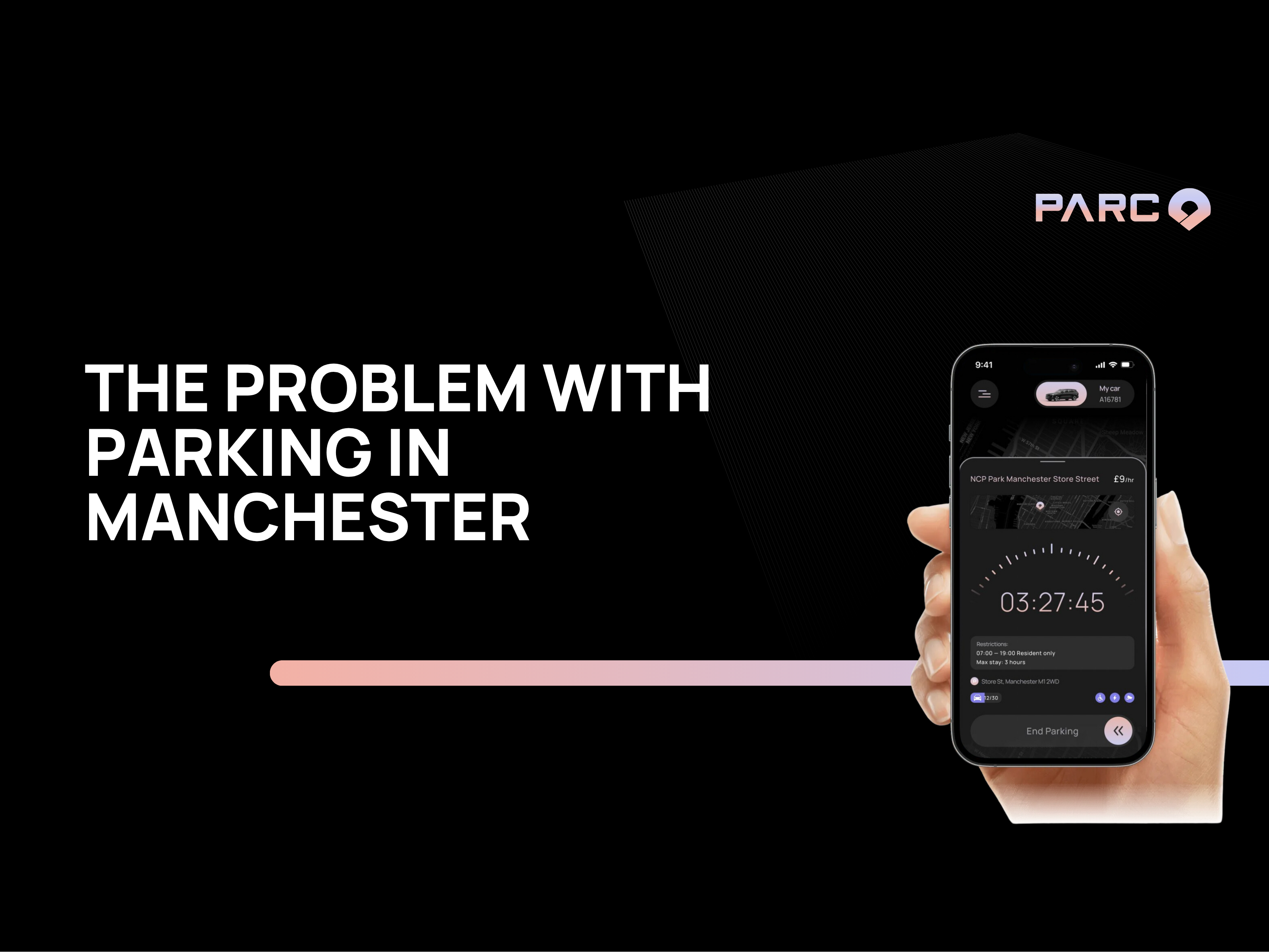
PARC takes a different approach. Instead of asking you to open an app, find the right location code, and estimate your stay, PARC detects when you’ve parked and automatically manages your session with the relevant provider, then winds it down when you return to your car. There’s no location code to get wrong, no session to forget to extend, and no need to know which app a particular street or car park uses.
It doesn’t remove every reason a ticket might be issued (genuine restrictions still apply, and drivers still need to park legally), but it removes the specific, well-documented human errors that account for the majority of tickets covered in this guide. It’s also part of a broader shift covered in our guide to the future of parking, where automation gradually replaces manual, memory-dependent processes altogether.
A PCN is a civil penalty issued by a council or Transport for London under statutory powers. A Parking Charge Notice is a charge issued by a private company for breaching the terms of parking on private land. They look similar but follow completely different rules.
For a council PCN, you typically have 14 days (21 for postal or camera-issued notices) to pay at a 50% discount, and 28 days to submit formal representations before a Notice to Owner is served. Private operators generally allow a similar window, though it varies, so always check the deadline printed on the notice.
Yes, particularly if you paid for the wrong registration, the wrong location, or the wrong vehicle. Include your payment evidence with your appeal.
For a council PCN, ignoring it leads to a Notice to Owner, then a Charge Certificate with an increased penalty, and potentially registration as a debt at the county court, enforceable by bailiffs. For a private Parking Charge Notice, ignoring it can lead to a county court claim and a County Court Judgment if the operator succeeds.
No. Wheel clamping and towing on private land without lawful authority has been illegal in England and Wales since 2012.
Often, yes. POPLA’s own data shows close to half of the appeals it handles result in the charge being cancelled, and council PCN appeals to independent tribunals have historically shown a broadly similar success rate. Appeals with clear evidence tend to perform particularly well.
You can escalate to the Traffic Penalty Tribunal (England outside London, and Wales) or London Tribunals (for London boroughs). This is a free, independent service and its decision is final.
You can escalate to POPLA or the IAS, depending on which trade association the operator belongs to. Both are free, independent appeals services.
PARC is the world’s first automated parking app. Instead of asking drivers to remember to pay, choose the right app, or estimate how long they’ll stay, PARC detects when you’ve parked and manages your session automatically until you return.
Parking tickets cause a disproportionate amount of stress for what are, in most cases, small and entirely human mistakes. Understanding which type of ticket you’ve received, what the real deadlines are, and what evidence actually helps an appeal takes away most of the uncertainty.
The broader pattern across almost every section of this guide is the same one we return to throughout our parking content: the current system asks drivers to get a lot of small details right, every time, with very little margin for error. Technology that removes those details, rather than simply digitising them, is where parking is heading next.
Avoid parking tickets altogether with PARC. Our automated AI app handles your parking for you.
You park.
PARC parks for you.
No more forgetting to pay.
No more entering the wrong location code.
No more juggling multiple parking apps.
PARC automatically manages your parking session and keeps you parked until you return.
The world’s first automated parking app.





.png)
