A LITTLE KNOW-HOW GOES A LONG WAY


Ever returned to your car just a couple of minutes late, only to find a parking ticket waiting on your windscreen? It's one of the most frustrating parts of driving, especially when you've already paid for parking and simply lost track of time.
You might have heard that drivers are entitled to a 10-minute grace period before receiving a parking fine. But is that actually true? And if you were only two minutes late, can you still get a ticket?
The answer depends on where you've parked, who operates the parking space and whether you had a valid parking session in the first place.
In this guide, we'll explain when the 10-minute grace period applies, why some councils reject appeals, what happens if you ignore a parking fine and how automatic parking apps like PARC are designed to help drivers avoid payment-related tickets altogether.
Yes, but not for every type of parking.
In England, a statutory 10-minute grace period applies when an authorised period of parking expires in a qualifying council parking place. This means a council generally cannot issue a penalty charge notice (PCN) for overstaying during those first 10 minutes.
However, that doesn't mean you can park anywhere for 10 minutes without paying, or that every car park must allow an extra 10 minutes.
Different rules apply depending on whether you're using council parking, private parking or a restricted area.
It's also important to understand the difference between a legal grace period and a council choosing to cancel a fine as a gesture of goodwill.
Where the statutory rule applies, it isn't optional. But when a driver asks for a ticket to be cancelled because of an honest mistake or difficult circumstances, the council can consider the individual case.
And while some councils may be more sympathetic than others, drivers shouldn't assume that being only a couple of minutes late will automatically get a ticket cancelled.
In England, the 10-minute rule generally applies when a driver has been permitted to park in a designated parking place and that permitted period has expired.
For example, imagine you've paid to park in a council-operated bay until 2:00 pm.
If the bay qualifies for the statutory grace period and your payment was valid, a PCN for overstaying should not be issued at 2:02 pm. The protection continues for 10 minutes after the authorised period ends.
The same principle can apply to a designated council parking place where a permitted free parking period has expired.
However, the grace period isn't an extension of the parking tariff that allows you to ignore other restrictions. It also doesn't apply automatically to every place where a vehicle can stop.
No. The statutory rules discussed here apply to qualifying civil parking enforcement in England.
Parking enforcement arrangements differ across Scotland, Wales and Northern Ireland, and private parking has its own rules.
That's why it's important to check the rules for the location where you received your ticket, rather than assuming the same protection applies everywhere.
This is where many drivers get caught out.
The 10-minute rule is often misunderstood as a general allowance for being late, but there are several situations where it won't protect you.
If you park somewhere that requires payment and never start a valid session, you generally cannot rely on the 10-minute expiry grace period.
The rule protects the end of an authorised parking period. It doesn't give everyone 10 minutes of free parking at the beginning.
Many parking apps require you to enter a numerical code identifying the parking area.
If you accidentally select the wrong code, your payment might not be recognised for the space you're using.
Even if money has left your bank account, you could still receive a PCN because the correct parking location doesn't show a valid session.
An honest mistake may be worth explaining in an appeal, but it doesn't automatically mean the fine must be cancelled.
The expiry grace period doesn't give you permission to park on yellow lines during restricted hours.
These restrictions are different from an authorised paid parking session.
Parking in a loading bay without meeting its conditions, using a disabled bay without the required entitlement or parking in a residents-only area without a valid permit can lead to enforcement action.
The 10-minute expiry rule won't necessarily apply to these situations.
Even if you've paid for parking, you still need to follow the conditions displayed at the location.
An automatic payment or a grace period cannot override restrictions that make parking unauthorised.
Yes, the statutory 10-minute grace period applies to qualifying council parking places in Manchester, just as it does elsewhere in England.
Manchester City Council has also acknowledged the rule in its published parking reports.
However, that doesn't mean every Manchester parking ticket issued shortly after a driver arrives or after a payment problem must be cancelled.
Manchester is a busy city with extensive parking enforcement. According to the council's Parking Services Annual Report 2024/25, it issued 322,905 on-street parking PCNs and 56,345 off-street parking PCNs in a single year.
That's more than 1,000 parking notices every day.
Imagine you've paid for parking until 2:00 pm and return at 2:02 pm to find a ticket.
If you had a valid payment, were parked in a qualifying council parking place and the only contravention was overstaying after your authorised period expired, the statutory 10-minute rule should protect you.
But if your payment wasn't valid for that location, you never paid, or you breached another parking restriction, the situation is different.
That's why the details on the PCN matter.
Check the contravention code, the location, the observation times and the reason the ticket was issued before assuming that the grace period applies.
Not necessarily.
Even when a driver believes they've made a genuine mistake, a council may decide that the circumstances don't justify cancelling a valid PCN.
You might explain that you were delayed, selected the wrong location code or genuinely believed you'd paid correctly, only to have your appeal rejected.
That's frustrating, particularly when the mistake seems minor.
However, there's an important difference between asking the council to exercise discretion and challenging a ticket that shouldn't legally have been issued.
If a mandatory grace period applies, the issue is whether the PCN was lawfully issued. If it doesn't apply, the council may still consider your circumstances, but it isn't obliged to cancel a valid fine simply because the mistake was accidental.
The lesson for drivers is simple: don't rely on a grace period to protect you from every parking fine.
Private parking works differently from council parking.
Private car parks are often operated by businesses rather than local authorities, and the charges they issue are generally parking charge notices rather than council penalty charge notices.
Operators belonging to the British Parking Association (BPA) or International Parking Community (IPC) are subject to an industry Code of Practice that includes rules about consideration and grace periods.
However, the exact protections depend on the parking arrangement and the circumstances.
A consideration period is time allowed when entering a car park to find a space, read the terms and decide whether to stay.
A grace period is time allowed at the end of an authorised parking period to leave the car park.
These aren't the same thing.
For example, a driver who enters a car park, reads the signs and decides not to park is in a different situation from someone who has paid for two hours and takes a few extra minutes to leave.
Private parking operators must follow the applicable Code of Practice, but drivers shouldn't assume that every private car park offers 10 minutes of free parking.
Always read the signs and check the rules for the specific location.
Yes. If you've received a parking fine that you believe was issued incorrectly, it's worth checking whether you have grounds to appeal.
A parking ticket doesn't automatically mean the issuing authority or operator has applied every rule correctly.
Mistakes can happen, and drivers have the right to challenge notices through the appropriate process.
1. Check the details on your PCN
Look at the location, date, time, contravention code and issuing authority. Make sure you understand exactly what you're being accused of.
2. Gather your evidence
Keep your parking payment receipt, app confirmation, screenshots, photographs of signs and any other relevant information.
If you believe the 10-minute grace period applies, evidence of your authorised parking end time and the PCN issue time will be particularly important.
3. Submit your challenge to the council
Follow the instructions on the PCN and explain clearly why you believe it should be cancelled.
If you made a genuine mistake, explain what happened. If you believe the ticket breaches a statutory grace period, refer to the relevant rule.
4. Check the response and your next steps
If the council rejects your initial challenge, there may be further opportunities to make formal representations and, if necessary, appeal to an independent adjudicator.
The exact process depends on the type of notice and the stage it has reached.
NOTE: It is still at the council discretion. But we believe it is always worth appealing.
It can be.
If the statutory grace period applies, you may have strong grounds to challenge the ticket.
If it doesn't, you can still explain any mitigating circumstances and ask the council to exercise discretion.
Some councils may be more willing than others to cancel a PCN following a genuine mistake, but don't be surprised if your challenge is rejected.
Appealing is worth considering. Having a fine cancelled isn't guaranteed.
For more information, read our guide on how to appeal a parking fine.
Whatever you do, don't simply ignore it. A parking fine that starts as an inconvenience can become much more expensive and stressful if you leave it unresolved.
The process depends on whether the notice came from a council or a private parking company.
For a typical council PCN in England, the process can progress as follows:
1. Penalty Charge Notice (PCN)
You receive the original fine, usually with an opportunity to pay a reduced amount within a specified period.
2. Notice to Owner or enforcement correspondence
If the PCN remains unpaid, the council can progress the enforcement process and give the registered keeper an opportunity to make formal representations, where applicable.
3. Charge Certificate
If the case reaches the relevant stage without payment or a successful challenge, the council can issue a Charge Certificate, increasing the penalty by 50%.
4. Order for Recovery
The unpaid debt can be registered for enforcement through the Traffic Enforcement Centre, with an additional court registration fee.
5. Enforcement agents (bailiffs)
If the debt remains unresolved, the council can seek a warrant of control and instruct enforcement agents. Additional enforcement fees can make the amount owed significantly higher.
A council parking PCN enforced through this civil process does not normally result in a County Court Judgment appearing on your credit file.
Private parking charges follow a different process.
If you don't pay or successfully appeal, the operator or its representatives may send reminders and debt collection correspondence.
The operator may then decide to bring a civil court claim.
If the court makes a judgment against you and you don't pay within the required time, you could end up with a County Court Judgment (CCJ), which may affect your credit record.
Further enforcement action may also follow.
Receiving a private parking charge doesn't automatically mean you'll get a CCJ, and a debt collector's letter isn't the same as a court judgment.
But ignoring genuine legal correspondence is risky.
Yes, in some circumstances.
For council parking debts, enforcement agents may become involved after the required statutory enforcement steps.
For private parking debts, enforcement action can follow a court judgment and the appropriate legal procedures.
Bailiffs cannot simply turn up and seize belongings because you've received an ordinary parking ticket. There are legal steps that must happen first.
If you receive enforcement correspondence, read it carefully, check the deadlines and seek independent advice if you're unsure what to do.
You can find official guidance on challenging parking tickets and dealing with bailiffs.
Even when the 10-minute rule applies, relying on it can be stressful.
You still need to know whether the location qualifies, whether your payment was valid and whether you've breached any other restrictions.
And if you receive a ticket, you may need to spend time gathering evidence, submitting an appeal and waiting for a decision.
Wouldn't it be easier if you didn't have to worry about remembering to pay in the first place?
That's exactly why PARC was created.
PARC wasn't created simply because the world needed another parking app. It was founded by Erin Short after a simple parking mistake turned into a lengthy legal dispute.
A small error with parking details led to a situation that took years to resolve, highlighting just how frustrating and disproportionate parking enforcement can feel when something goes wrong.
Rather than accepting that drivers should have to deal with these problems, Erin decided to build a better solution.
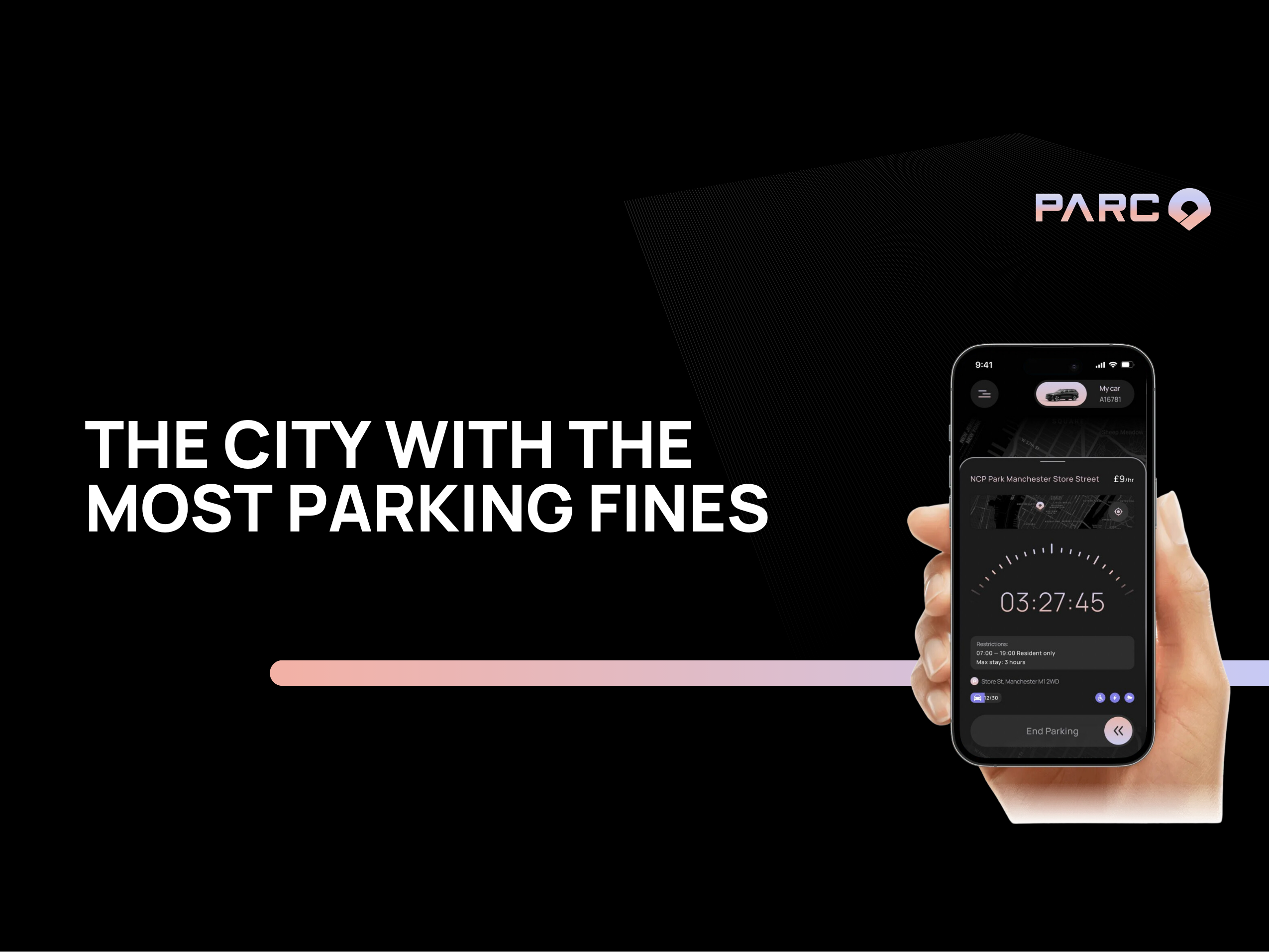
The result was PARC, an automated parking app designed to remove the everyday mistakes that can lead to parking tickets.
Instead of expecting drivers to remember to pay, choose the correct location code and monitor their parking sessions, PARC is designed to take care of the process automatically. PLUS it's all your parking apps in one. Just one app, instead of downloading a new one at each new location. DREAMY.
With PARC's fully automatic mode enabled, you can drive into a supported parking bay, park your car and walk away.
PARC detects when you've parked, identifies whether payment is required and manages the supported parking session until you return.
That means:
PARC also offers semi-automatic and manual parking modes for drivers who prefer more control.
The app is designed to bring supported parking providers together in one place, with published integrations covering more than 1.8 million parking spaces across the UK.
Of course, PARC can't prevent every parking ticket. Drivers still need to park legally, follow restrictions and observe maximum stay limits. Automatic payment also depends on location coverage and successful session activation.
But when it comes to avoidable payment mistakes, PARC is designed to make parking one less thing to think about.
You park. PARC parks for you.
The only parking app you'll ever need.
No. The statutory 10-minute grace period applies to qualifying authorised parking periods in designated council parking places in England. It doesn't apply automatically to all parking locations or contraventions.
Yes, depending on the contravention. If you haven't paid, are parked in a restricted area or have breached another condition, a ticket may be issued without the 10-minute expiry protection. If you had a valid authorised session in a qualifying council bay and the only issue was expiry, different rules apply.
Not where a statutory grace period applies. Councils must follow the law. However, councils have discretion when deciding whether to cancel otherwise valid PCNs because of mitigating circumstances.
The statutory 10-minute rule applies to qualifying council parking places in Manchester. However, it doesn't protect every parking situation, and Manchester City Council may reject discretionary appeals where a valid contravention occurred.
Yes. Check whether the statutory grace period applies, gather evidence of your payment and the PCN issue time, and follow the appeal process. Even if the rule doesn't apply, you can explain any genuine mitigating circumstances.
A private parking charge can lead to a CCJ if the operator brings a successful court claim and the judgment isn't paid within the required time. Council PCNs follow a different statutory enforcement process and don't normally create a CCJ on your credit file.
Yes, but only after the relevant legal enforcement steps have been followed. Ignoring a parking fine can lead to additional charges and enforcement action.
Yes. PARC is designed to detect when you've parked and automatically manage payment at supported locations. Its fully automatic mode removes the need to remember to start and extend supported parking sessions manually.
A couple of minutes shouldn't have to turn into weeks of appeals, extra charges or stressful letters.
But when parking payments rely on drivers remembering every detail, mistakes are always possible.
PARC was built to change that.
With fully automatic parking, you can park, walk away and let PARC manage your supported payment session until you return.
No more forgetting to pay.
No more entering the wrong location code for supported sessions.
No more juggling multiple parking apps.
The only parking app you'll ever need.